When should you use a points transfer bonus?
1 min read · Strategy, Card offers
Use a points transfer bonus when you already have a trip that needs that partner's miles and the bonus raises your redemption value above what cash back would have paid. Do not transfer just because the email landed. Transfers are usually one-way, and orphan miles are expensive clutter.
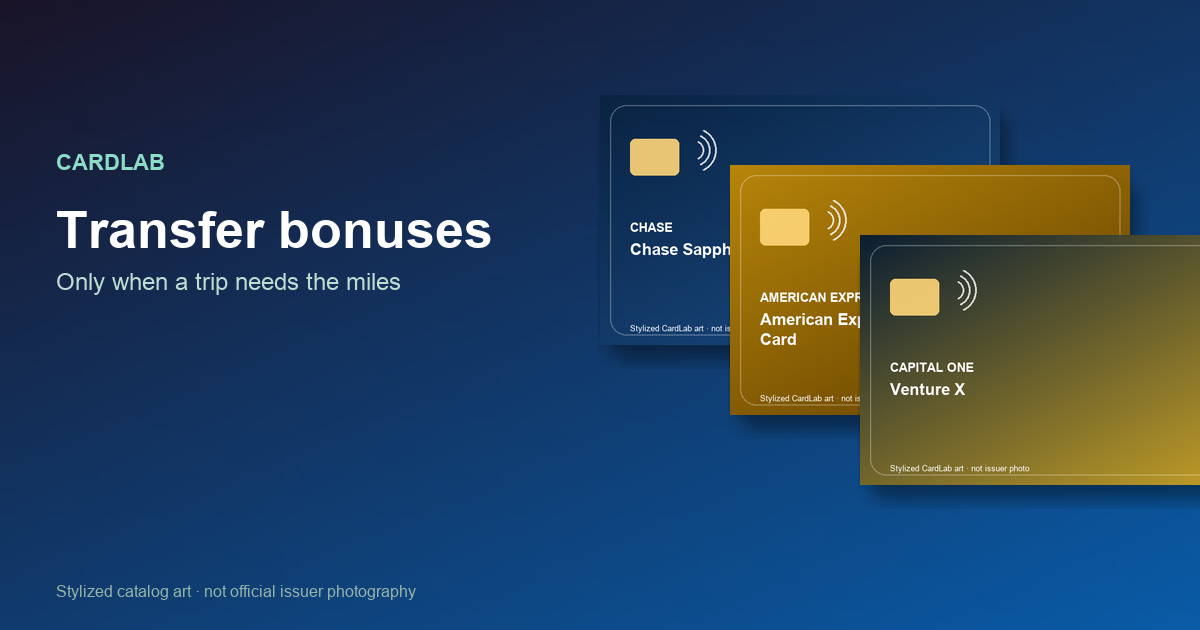
A transfer bonus is a temporary multiplier on a move you cannot undo. 1
Treat it like a sale on a jacket you already planned to buy.
The order that keeps you safe
- Find award space at a cash price you understand.
- Price cents-per-point: cash fare divided by miles required.
- Apply the bonus: if you need 40,000 miles and the bonus is 30%, you transfer about 30,770 from the bank.
- Transfer only that amount, then book.
If step 1 fails, the bonus email is noise.
Cards that make this concrete
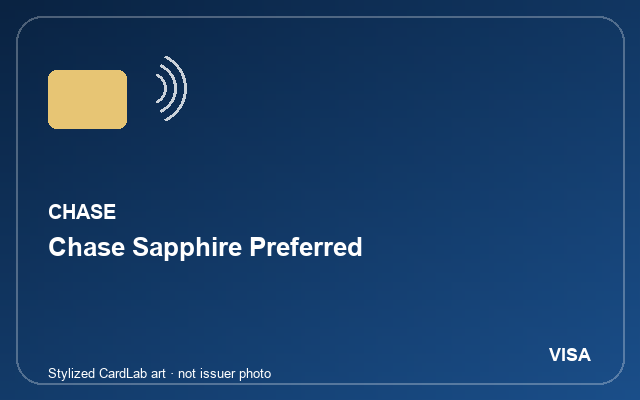
These are stylized CardLab catalog faces, not official issuer photos.
Recompute the floor
Suppose cash fare is $800 and the award is 40,000 miles: 2.0 cents per point before the bonus. With a 30% transfer bonus you move fewer bank points for the same award, so the effective value of each bank point rises. If your cash-back alternative on that spend history was 2%, miles still have to clear that floor after fees and hassle. 2
Timing risk
Some transfers are near-instant. Others take days, and award seats disappear. If the partner is slow, screenshot space, transfer in business hours, and keep a backup cash fare.
When to ignore the promotion
Ignore it when you have no trip, when the partner is one you will not fly, or when the bonus is smaller than the devaluation rumor you are trying to outrun with panic transfers. Flexible points still buy you optionality.
CardLab angle
Track which cards fund the flexible balance. Price the redemption yourself. The bonus is a calendar event, not a personality.
Common questions
Are transfers reversible?
Usually no. Once points leave your bank for a partner, they follow that partner's rules. Confirm before you click.
Do all partners get the same bonus?
No. Promotions often name specific airlines or hotels. Read the list on the issuer's transfer page for the dates that apply.
Should I transfer everything during a bonus?
Only what the trip needs, plus a small buffer for award space changes. Leaving a balance in the flexible currency is often smarter than emptying the account.
Sources
CardLab tracks the cards you hold and the bonuses you are chasing, with every rate read from the issuer's own page.
Get CardLabWhich card to use